
There is more information within reach than anyone can absorb. The natural response is to skim: collect the shape of an argument, save the link, and move on. That is sometimes exactly right. It is also easy to mistake recognition for understanding.
Pageflow began with a frustration: PDF readers are designed to display pages, while study systems are designed to extract material from them. The actual moment of reading sits awkwardly between the two.
Finding your edge means reading at the boundary where your current understanding ends.
Reading has more than one speed
A first pass should be quick. Headings, figures, conclusions, and unfamiliar terms tell you where the terrain changes. A difficult derivation or mechanism deserves something slower. Review can become fast again.
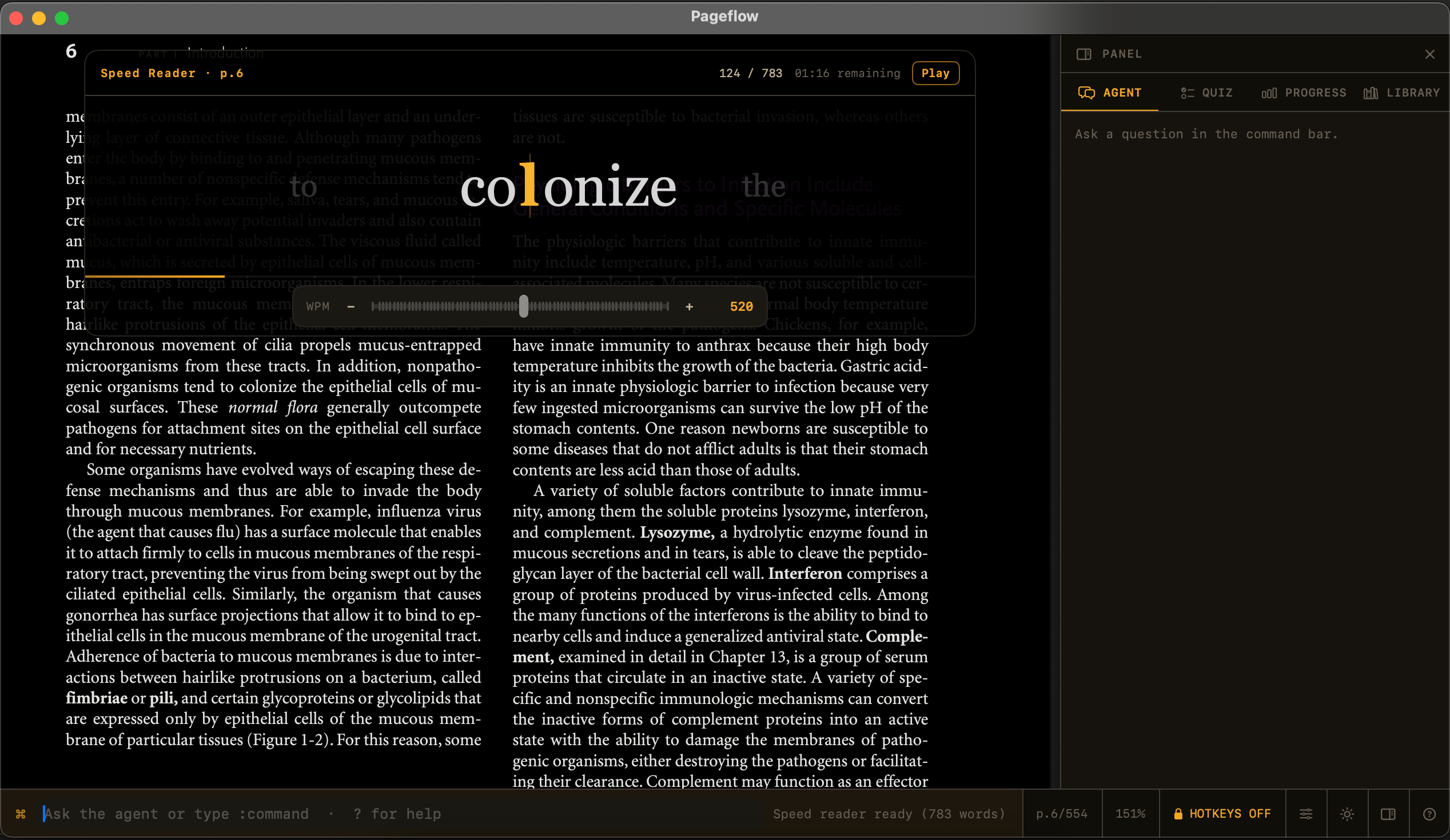
That is why Pageflow includes narration and speed reading alongside questions and quizzes. These are not competing philosophies. They are different gears for different parts of the same document.
Make effort visible
The most valuable signal is not the number of pages opened. It is where attention slowed, where a page was revisited, and whether an explanation survived once the source was briefly hidden.
The document remains the authority
AI can explain, question, and connect. It should not make the source disappear. Pageflow is being built so that assistance points back to the passage, the page, and the evidence behind an answer.
The goal is not to finish every document. It is to make a deliberate choice: skim what only needs orientation, and stay with what deserves understanding.